After a quick blast of cold {the frost looked like snow, y’all} zapped the lingering flowers and officially ended pepper season, we had a weekend warm-up. The timing was perfect, since we wanted to open the hives to see if they’re winter-ready, as well as check out the hive beetle traps.
The way I understand it, when bees overwinter, they huddle together in the center of the hive. The combined body heat they generate keeps them warm through the winter, while they also eat their way through honey stores. For this reason, you don’t want a lot of empty space in your hives: hot air rises – and if the “next level” is empty, all that warmth is wasted.
We added supers/levels during the summer to prevent swarming, but as temperatures and population numbers drop, that space could be a problem. After opening the hives, two are making use of their “second story” – with both bees and honey present. We decided to leave those supers on the hives, and are hoping for the best. The second supers on the other hives were empty, so those we pulled off for winter storage.
After a rough transition, having to start pretty much from scratch, these bees have worked very hard the last 4ish months, growing their numbers {so many bees} and gathering stores. We’re so proud!

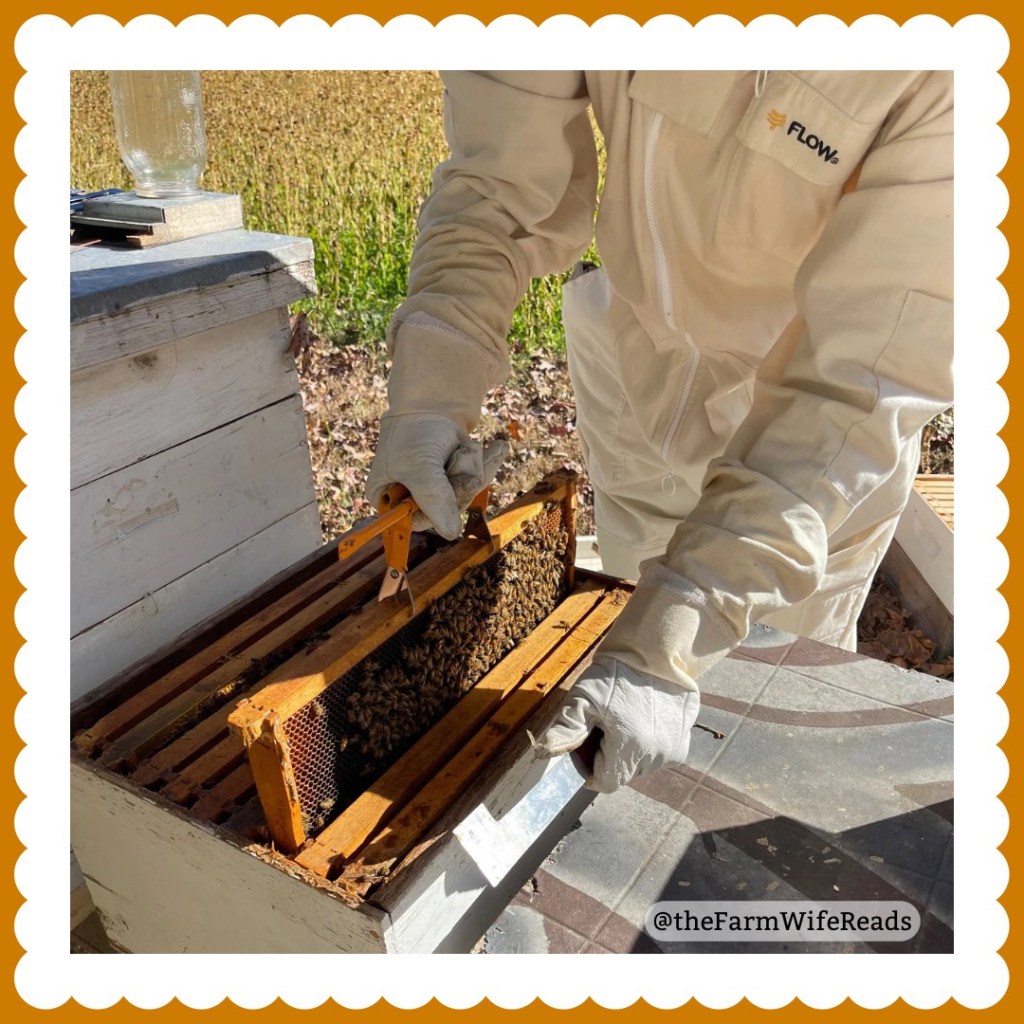
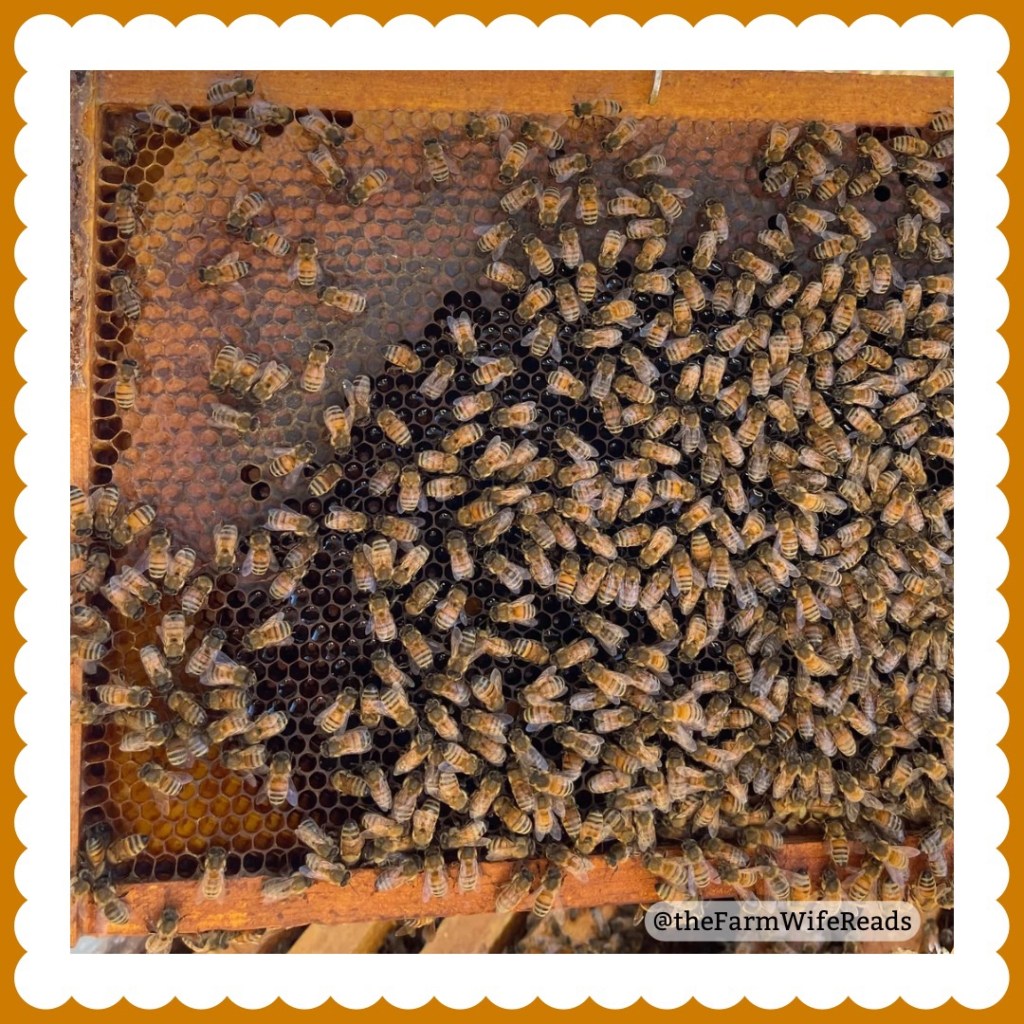
We know the bees have been slurping down their sugar water, and they loved the buckwheat field in bloom, but we weren’t sure if they’d be able to get honey made before winter or not. Friends, we were absolutely delighted to discover they’ve got capped honey. We are still planning to feed them throughout the winter, but knowing they were able to get honey all the way to the capped stage? That’s promising. And exciting. Make sure you click on the individual pictures to see them full-size, so you can really appreciate the gloriousness of that honey arc.


In addition to checking frames and hive states, we also checked the hive beetle traps. They seem to be working, there were several dead beetles in the oil. We also discovered that the bees have been doing their own beetle extermination: trapping them in propolis {more on this below}. We opted to leave the traps in for the winter, since the bees will be less active.

One of the many things I’ve learned during my introduction to beekeeping is that in addition to making honey, bees also produce propolis. Made from tree resin {fun fact: different trees will produce different colored propolis}, they use this substance to seal cracks and other imperfections. And as mentioned, they’re also using it to trap hive beetles and other invaders. It is very sticky, and very secure – it took some effort to lift the super off, as you can tell by the stretched nature of the propolis in the picture.
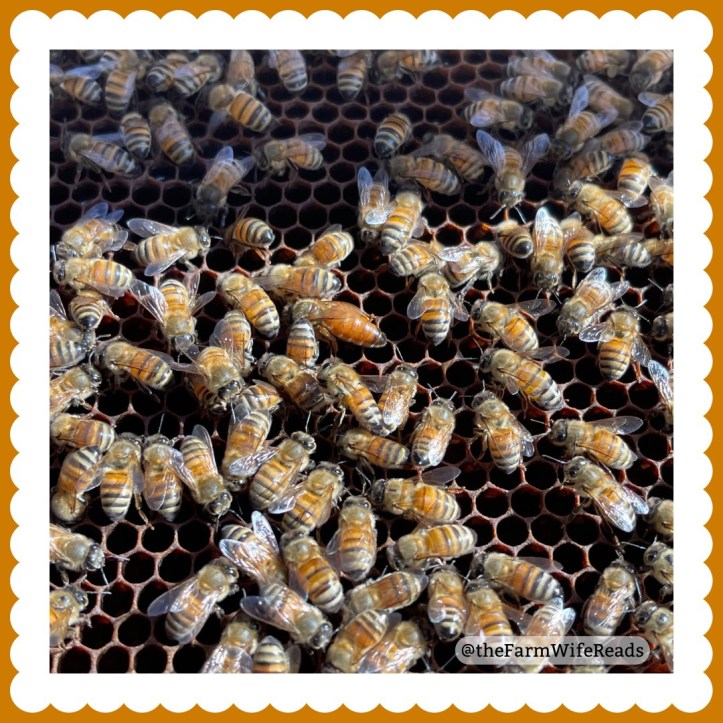
The nuc we bought came with a marked queen, so she’s easy to spot. Our other hives however are “wild” in that the queens are unmarked. They have booming populations – so we know there are queens, and they are doing what queens should do. It’s just incredibly difficult to find them. So you can imagine how excited we were to see one on a random frame during our check. We’ve learned that queens take a break from laying eggs for winter, but she’s clearly still keeping tabs on her hive.
Speaking of our little nuc, those girls have been so very busy! We had several empty frames in their box, and they’ve been hard at working making wax to fill the space. This particular frame did not even have a foundation strip, so this is all their own work. Isn’t it beautiful? The bees in the center picture are “festooning,” which is the process by which they draw wax out of glands. You can’t quite see that in the picture, but you can tell they’re “holding hands.” {Again, make sure you click on the individual picture to see it full-size. The details are worth it!}


All in all, it was a very promising hive-check to “winterize” the beeyard. Finding capped honey was a pleasant surprise, and all the hives appear to have good numbers going into the “hibernation” season. Hopefully, with warm Southern sun and continued refills of sugar water, they’ll make it through winter. It was a little sad though, since this will be our last look inside until it’s warm again. Winter will be the time for building new hives and getting ready for expanding our bee empire. Always a new adventure for the beekeepers.

Yay, this is amazing! Capped honey!
LikeLiked by 1 person
We were SO excited!! Yay honey!! 🍯🐝🎉
LikeLike
[…] the final hive check before winter, it’s been hard to wait for it to be warm enough to open them up again! Bees have to work […]
LikeLike