Our goal is to save as many seeds as we can from year to year. We do purchase new varieties, as we experiment with flavors, but in general we try to save the seeds for our “bulk” planting. Every kind of plant has different requirements for saving seed, and we have tried multiple methods of saving tomato seeds before finding the process we like best. We have used this method several years, and it has worked consistently for us, so today we are sharing the process.
Note: Seed saving only works if you’ve got heirloom tomatoes. The seeds from hybrid tomatoes will not reproduce the same kind of tomato – usually they will revert to one of the original varieties used in the creation of the hybrid variety.

Step 1: Collect juice and seeds from tomatoes in a glass vessel. We simply cut our tomatoes in half and squeeze the “guts” into our glasses.
Make sure you label which tomatoes go where!

Step 2: When the tomatoes have developed this white film/mold, they’re ready. It’s a type of fermentation process that breaks down the enzymes and helps generate clean, savable seed.
This takes a week or so, depending on temperature and etc.
It’s also important that you have enough juice in with the seeds so they don’t dry out. As you can see above, the Amish Paste seeds almost got too dry. This is a very real struggle with cherry varieties, and the only downside of this method.
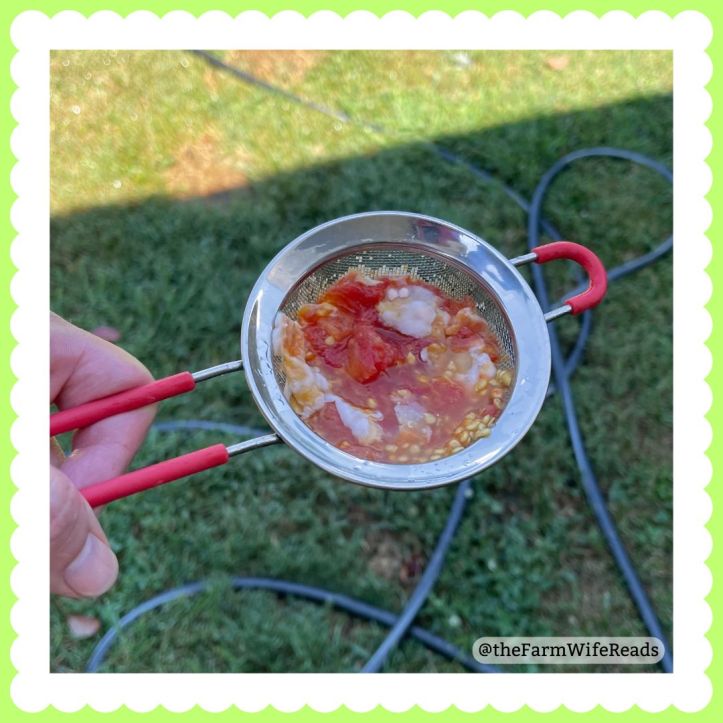
Step 3: Dump the entire tomato contents into a fine mesh strainer. It’s best to do this part outside.

Step 4: Rinse tomato seeds thoroughly. We find using the spray nozzle on the hose works best.
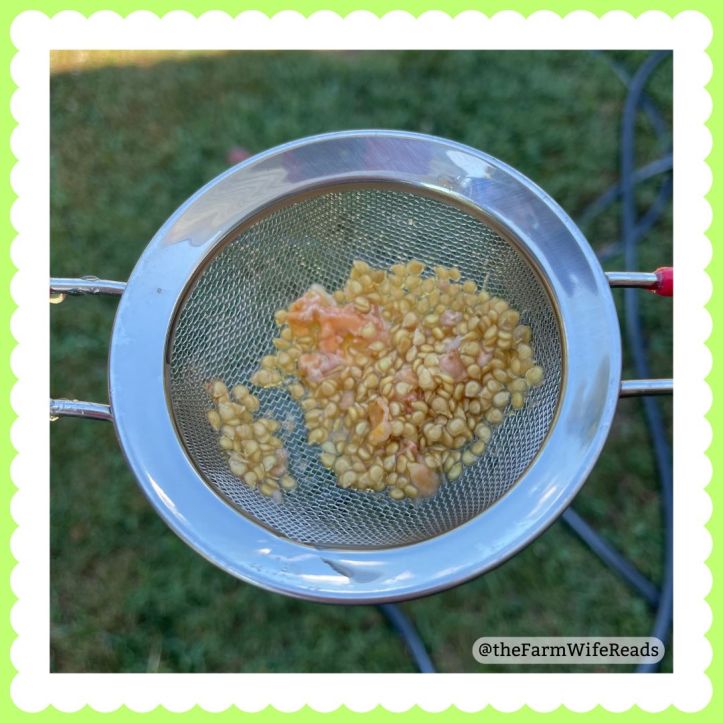
Step 5: Rinse the seeds as clean as you can get them.

Step 6: Spread on paper plates, allow the seeds to dry thoroughly.
Make sure you keep the labels with the appropriate seeds!

Step 7: Once seeds are dry, package and label for storage. We usually store ours in the freezer.
The Pineapple tomato seeds have been saved year over year for 40 years, first saved by Mr.’s grandparents. They are truly an heirloom tomato, and our absolute-must-grow every year, and it’s very important to us to be able to keep saving those seeds and continue the legacy.
Being able to save seed not only gives you peace of mind in knowing you’ll be able to get a particular variety {we try to only grow heirlooms, and sometimes the seeds are not available}, but it also frees up the garden budget for trying new things. The Brandywines were a new tomato for us this year, and we loved them so much we saved seed and plan to grow them again.
Next year, we want to add another new “sandwich” tomato, and at least one new variety of cherry. And yes, we are already planning for the 2026 tomato season!
Have you ever saved seeds? If so, what method do you use?

Wow I had no idea you had to keep them in their goop and let it get yucky first! That was an interesting fact about the enzymes!
LikeLiked by 1 person
We had been trying it other ways and it was so hard to get the seeds clean and dry without sticking to everything. Mr saw that way while researching and when we tried it: total game changer!
LikeLike
Fascinating! I had no idea this was how it worked. I think it’s incredible how long the “lineage” can run on heirloom seeds!
LikeLiked by 1 person
It really is! When we are on the heirloom seed sites looking for new varieties to try, some of them have these super detailed histories going back to So-and-So’s garden in 1902 or some such. It’s wild and incredible and so inspiring too 🙂
LikeLike
This is good info, Rebecca. Thanks for giving us the benefits of your trial and error. I have saved flower seeds but never tomatoes 🙂
LikeLiked by 1 person
When we discover tricks like this, we love sharing! Because it’s definitely trial and error 😂 Flower seeds are fun to save too – I’ve got some decorative grass seed heads drying on my table now 🙃
LikeLike
Wow over 40 years is a long time time to have consistently saved seeds for, I’m impressed. I also had no idea that you had to leave them in their juice initially either. I know you have to let bean seeds and things dry out but not that particular element of it.
LikeLiked by 1 person
One of the methods tried previously does involve just spreading out the seedy bits juices and all and letting them dry, but they were so hard to get separated into individual seeds and were just … kinda icky? It’s amazing how every plant has different requirements – our green beans we let dry on the vine (and then further drying before shelling), and tomatoes we ferment, lol
LikeLiked by 1 person
Yeah now that you’ve said it I can imagine they’d get tricky to separate that way. I’m glad you found a method that works well for you. Sounds like it all keeps you very busy then. It’s great that you manage to keep so many seeds for future use though.
LikeLiked by 1 person
[…] eats from home and abroad. As the garden starts slowing down and shifting gears, we got our tomato seeds saved for next year. We enjoyed a stretch of rainy days, and I completed another month of the Jane Austen […]
LikeLike